Sunday, March 4, 2012

New Musics! VG NU


I have another short collection of tracks available for free download! I have entitled this mini-album VG NU, as all the tracks are in some way video game themed. Or rather sound something like the video games of my childhood...

Tracklist:

Intro Scene
Moves
Pad Fast
Dungeon Scene
Battles
Theme Scene


Download them all here

Tuesday, February 28, 2012

Chomsky's Foreign Policy Methodology in a Nutshell

In his own words:

"One lesson is that to understand what is happening we should attend not only to critical events of the real world, often dismissed from history, but also to what leaders and elite opinion believe, however tinged with fantasy.  Another lesson is that alongside the flights of fancy concocted to terrify and mobilize the public (and perhaps believed by some who are trapped in their own rhetoric), there is also geostrategic planning based on principles that are rational and stable over long periods because they are rooted in stable institutions and their concerns."


From Losing the World from American Decline in Perspective, Part I

Sunday, February 26, 2012

Some thoughts on "Drug Culture"

The other day (actually a week or so ago) I had the pleasure of viewing a forum/discussion on drugs. How I got to that topic or the video itself, I cannot recall. Here is the link. The panelists were the psychologist Susan Blackmore, journalist Peter Hitchens, philosopher Edward Skidelsky, and some anthropologist. They discussed the ethics of drug use, the war on drugs amongst other things. Peter Hitchens rather stole the show with his contrarian conservative opinions, though the other panelists had interesting things to say as well.

For example Skidelsky defended alcohol and marijuana as certain goods. However it seemed as though his case was that these drugs were a means to goods, not good in and of themselves. For example he cited an author who wrote all his books while drunk, and how marijuana can cause one to think of ideas which stand up to "philosophical scrutiny." These examples focus on the specific ends: novels and thought--not on the experience of the drug as good in and of itself. Further using marijuana and drugs clearly aren't necessary conditions for writing good novels and having good thoughts. Neither are they necessary for good lives. Still perhaps they help, for example many persons (Roger Scruton's book comes to mind) defend the proposition that moderate alcohol use enhances life. Some (Carl Sagan) do the same for marijuana. Skidelsky also warned of the dangers of solipsism from drug use. On this he is spot on; drug use doesn't enhance moral behavior in any way, and has much ability to do the opposite. Like other forms of recreation it enables one to ignore moral obligations to others.

Susan Blackmore defended not only marijuana, but powerful psychedelics. She stipulated, quite rightly that hallucinogens (psilocybin, LSD, Etc) can bring on quite powerful, changing experiences. I think tripping as such could properly be classified as religious experiences. Like religious experience she claimed they can be events in a life from which the tripper gains knowledge. In an article she claims and describes this phenomenon, pertaining to a specific LSD trip:

"Instead,  the onslaught of images eventually taught me to see and  accept the frightening depths of my own mind - to face up to the fact that, under other circumstances, I might be either torturer or tortured. In a curious way, this makes it easier to cope with the guilt, fear or anxiety of ordinary life. Certainly, acceptance is a skill worth having - though I guess there are easier ways of acquiring it."

She rather undercuts her argument by the last clause. If there is religious experience it is the experience itself that is valuable, not the knowledge. For as she acknowledges the knowledge could be gained otherwise, and there is in fact a good chance that it is false. For examples of the latter, if you feel like torturing yourself you may want to read Daniel Pinchbeck's book 2012 (which is in short druggie/jungian nonsense). Further many religious experiences cause knowledge of conflicting beliefs. There is a wide spectrum of Christian-Hindu-Anamistic-New Age etc. experiences which cause logically incompatible beliefs. This fact is enough to show that the actual knowledge will come from critical analysis that is independent of the religious experience. And analysis of thoughts that can come otherwise, without the physical and mental risks.

Peter Hitchen's was completely alone due to his antagonistic relationship with drugs. The conservative contrarian was probably the most interesting, because of this. He claimed that there was no war on drugs in the UK (A claim which I can't criticize or endorse. I am completely ignorant of the situation, and neither side made an entirely convincing case). He also mentioned the fact that marijuana can cause psychosis and can impair those who use it at a young age.This was a refreshing fact, that many manage to ignore. But this isn't relevant to issues of marijuana legalization for consenting adults; for we don't prohibit alcohol use for these reasons. So I am hardly convinced about his case against marijuana legalization. In fact quite the opposite. Since there aren't any sufficient reasons for making marijuana illegal to the public it shouldn't be illegal! Peter Hitchen's also made the banally stupid claim that addiction is just another word for "weakness of will." Apparently he is completely unaware of the work done by psychology and neuroscience on addiction. If he means by weakness of will something for which persons are responsible for he is completely wrong.

The anthropologist had little to say on the topic other than some nifty historical tidbits. That concludes my thoughts on the discussion.

Thursday, February 9, 2012

The Existence of Humans is Evidence that God does not Exist

In this post I will attempt to succinctly state the anthropic argument against the existence of God (A morally perfect, powerful, and knowledgeable being). I take a lot of inspiration from Mark Walker's piece here, though my discussion will proceed differently. It's basic form is as follows:

(1) If God exists humans would not exist (2) humans exist (3) hence God doesn't exist.
The 2nd premise is uncontroversial, the 1st is where we shall focus our sights.

Imagine this case: You are to procreate a child. We have designed a pill where you can choose what moral, mental, and physical traits your child has. You have two options (a) take a pill where the child in question will have just as much moral, mental, and physical abilities as you do or (b) take another pill where the child in question will be severely morally, mentally and physically deficient to you. In case (a) the human will be, so to speak, average in abilities, but in case (b) the being will have less moral knowledge, be intellectually handicapped, and physically handicapped. Now it seems wrong to take pill (b) since the deficiencies of the child will harm both the child and others; hence you ought to take pill (a). Further if you were to be the child you would clearly wish that your parents chose pill (a) in a case like this.

Lets think of another case, this time from Mark Walker. Suppose humans knowingly create Chumans;

"Chuman’, as this species is known, is created from a human chimpanzee cross. Chumans are mentally and physically challenged in comparison with humans, and have been genetically altered to have a strong propensity for violent outbursts (a propensity they wish they did not have)."

Further these Chumans survive humanity, yet lacking the tools and intellect for modern medicine and agriculture many starve to death. Their history is full of war, disease, starvation, and rape. Wouldn't it be wrong to create such beings? Why create such beings instead of more humans?

In fact there are several real world examples of the results of something like pill (b) and the chumans. There are actual persons who are physically, mentally, and morally handicapped. This causes harm to others due to the lack of moral knowledge and ability, and harm to the person in question who may lose out on many goods of the average human (social, physical, intellectual etc.). If given the choice most parents would choose pill (a), as they ought to.

Hence we can extract the procreation principle like this: 

It is wrong for X to cause, knowingly and voluntarily, the procreation of a Y; which is morally, mentally, and physically deficient to X

Using the procreation principle (PP) we can support premise (1). If PP is true God wouldn't create humans since she can do no wrong (being morally perfect and all). Because humans are morally, physically (in terms of ability--since God isn't a physical being), and mentally disabled from God, she wouldn't create such beings.

An Objection Concerning the Impossibility of PP

Suppose it's impossible for God to create creatures that are not morally, mentally, and physically deficient to her. Then one might be tempted to say that PP is false since it is logically impossible for God to create other beings like her in the required senses, yet it is still permissible for her to create beings. I am not inclined to think this is true but suppose it is, lets stipulate that it is logically impossible for God to create other Gods and that it is permissible for God to create a world even so. We then could amend the principle as follows:

It is wrong for X to cause, knowingly and voluntarily, the procreation of a Y; which is UNNECESSARILY morally, mentally, and physically deficient to X

Lets call this idea PP*. In it, unnecessarily means, that X shouldn't create a Y insofar as another Y* could logically be morally, physically, or mentally better off. So PP means X shouldn't create Y's that are deficient, but PP* says that X's can create Y's that are deficient but only as least deficient as possible.

How does this relate to the anthropic argument? Well according too PP* God can only create beings that are least deficient as possible. Do humans fit this criterion? Bluntly stated no they don't. We don't even come close. God could have created Angelic beings with more knowledge, power, and moral goodness. She could have made beings that are good by nature as she is. These beings don't have to be as powerful or knowledgeable as she is, all that is needed is that they be better then humans. 

So to the objection that PP is logically impossible hence premise 2 of the argument is false one can reply as such:

No. God could create or sustain other beings with the same mental, moral, and powers as she (even if these beings lack necessary existence or something like that). Further supposing she can't beings like her that in itself is no reason for thinking PP is false. If that were the case God simply wouldn't be morally perfect if she created any world with beings.

Suppose we are mistaken in thinking PP is true, than we can replace PP with PP*. Since there could be better beings than humans the anthropic argument goes through and God isn't justified in creating humans. And as such God as defined does not exist.

I think is one of the strongest arguments against the existence of God. This is probably because it taps into my strongest intuitions of morality and reality. Object away!

Saturday, January 21, 2012

Caleb's Favorite CAlbums of 2011

Not only do I make music but I occasionally listen to it. And as such I thought I would make a list of my favorite albums of 2011 with brief annotations. In no particular order.

Undun
The Roots

A concept album, the album begins with the protagonists death and continues into memories and ruminations of an ultimately sad and criminal life. There are many thoughtful insights from a very well painted album, possibly because the artists themselves knew persons like the protagonist; and escaped a similar life themselves.

Bad as Me
Tom Waits

Tom Waits. Enough said.

This is our Science
Astronautalis

Possibly the album which I have listened to the most of all of these. It has a smart rustic hip hop force. There are many allusions, most to scientists, many of which I have yet to discover.

Cinematropolis
Blue Scholars

Blue Scholars were the group that inspired my love of underground hip hop. This album is probably my least favorite of all of theirs but nevertheless it quite dope.

Are You Gonna Eat That?
Hail Mary Mallon
Hail Mary Mallon is a threesome of Aesop Rock, Rob Sonic, and DJ Big Wiz. This album is excessively obscure and abstract, and seems to have been put together rather quickly. But nevertheless these attributes are beneficial and representational of the overall project; one, which I think, barely belongs on this list.

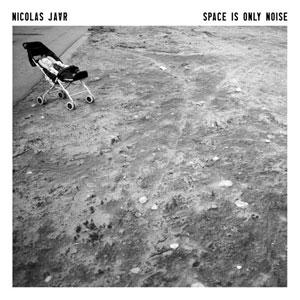
Space Is Only Noise
Nicolas Jaar
Beautiful ambient album. Perhaps the most beautiful, sensual album on this list.

ISAM
Amon Tobin
Another electronica album. This one contains butterfly robot space music. It bumps, twists, and raptures.

No Kings
Doomtree

Doomtree is a group of P.O.S, Sims, Dessa, Cecil Otter, Mike Mictlan, and Lazer Beak. All of these fellows are very talented in whatever they do. All complement each other brilliantly. The beats are very nicely electronic as well.

Did I miss anything?

Tuesday, November 8, 2011

Why Occupy Wall Street is a Legitimate Movement

In this short post I am going to argue that some of the grievances of the Occupy Wall Street movement are legitimate. In particular those having to do with economic inequality and the role of money in government. These two issues are quite similar. By legitimate I mean that the concerns of the protestors are at the very least morally permissible. Even more so they are in the moral right.

Economic Inequality
The wealthiest 1% of Americans own somewhere between 30-45%  of the wealth in America. The wealthiest 10% own something like 60-70% of the wealth in the USA. This is one of the central concerns of the OWS signified by the "we are the 99%" slogan.

Why is this wrong? Perhaps first we should consider why some believe it isn't wrong. The thought would go something like this: the wealthy worked for their money, they earned it, they are completely responsible for their wealth. The reason for thinking that it is wrong is opposite: the wealthy are not completely responsible for their wealth, in fact a large part of their prosperity is due to luck (or perhaps by cheating--this is not what I will argue here though). I think the sciences support the latter proposition much more so then they do the second. Sciences, such as, psychology show that humans are strongly influenced by their genetics and environment. For example people are much more likely to help strangers if there is a nice smell of bread as opposed to a more murky location. If such weak environmental factors as smell influence persons, how much more so does the home and community a child is raised in? If the sciences don't give reason to doubt freewill all together, at the very least they establish that it plays a relatively small role. So here is the argument,

  1. The economic status in the United States is determined by chance
  2. If something is determined by largely by chance and it's consequence is unequal then it is unfair
  3. The economic situation in the United States is unequal
  4. Hence, The economic situation in the United States is unfair
The argument appears to me to be logically valid. If the premises are true then the conclusion must follow. I do not think p2 or p3 will be denied. Premise one will be slightly controversial. But surely everyone agrees that persons are strongly influenced by factors outside of themselves. These factors are environment and genetics. The sciences show that these factors determine a persons future life immensely. A person who comes from a troubled household will usually not be as economically successful as other persons who come from stable homes, since due to resources they probably won't be as intelligent  etc.This is common knowledge which is empirically confirmed.

Thus it can be confirmed that the United States of America is unequal as well as unfair. Protesting this is right. Another consideration which is even more so morally relevant is economic global inequality. Anything which brings into question the global inequality is also in the right insofar as it brings the scale inequality into question. By attacking the economic inequality in the States the OWS movement also attacks inequality on a global scale. Although it could certainly do this more so.


Democracy and the 1% aka Banks "Frankly Own the place!"

Money plays a extraordinarily large role in American politics. In order to get be elected a politician must raise an enormous amount of money. Media commentators/actors constantly analyze how much politicians rage during election seasons as sports commentators/actors would analyze the trends of a given player's performance. This isn't to say doing so is wrong, just to emphasize how large a role finance plays in election. Obviously, the largest donations come from the richest persons, as such politicians are more likely to follow the desires of their richer donors. Further rich donors have much more power then the average voter in deciding who will actually run in an election, and then who will win. This process doesn't stop after the election, it merely continues through lobbyists and other means. Taking this into consideration one can conclude that the political power of the 99% is (generously) something like 1/100 of the power of the 1%, and then 1/1000 the political power of the .01%. Is this democracy? Rather it's government of some of the people,  by some of the people, for some of the people. If it is democracy it is a primitive, hierarchical version of such a thing. Insofar as democracy is a good thing, the occupy movement is right in criticizing the role of money in politics. One way to begin to solve this issue, would be to increase economic equality. This could be done in many ways, by increasingly increasing the quality of education (particularly in poorer areas since there is a direct correlation between educational achievement and income, as shown by this map), abolish the Bush tax cuts, granting universal healthcare, reversing the trends of what is increasingly proving to be a two-tiered justice system, creating a livable wage, implementing the Robin Hood Tax and so on...

There are of course some different morally issues that can be discussed such as: are Occupy's means of protest effective? Where should occupy go from here? Is it really worth protesting the woes of America in the face of much more grievous global issues? And so on.

However I take it that the central message of Occupy Wall Street is a legitimate on for the reasons given. Now go forth and consider Occupying!

As a side note Paul Krugman has a decent article on this subject which can be read here: Oligarchy, American Style

Sunday, October 9, 2011

Ambient Mini Album: Free Download!

I recently made a few ambient/experimental tracks and compiled them into a mini-album. It is good for naps. Some of the pieces are quite nice if I say so myself (my personal favorites are asign, chimes, and choir). There are 7 total tracks, which I decided to reverse making the album a total of 14 tracks. The track list is as follows:


  1.  asign
  2. chimes
  3. clock water
  4. a bit dif
  5. fith
  6. choir
  7. low e
  8. e wol
  9. riohc
  10. htif
  11. fid tib a
  12. retaw kcolc
  13. semihc
  14. ngisa
You can download all the tracks at http://hulkshare.com/4l083ez2dsex.