I have clearly not blogged in quite a bit. As such I may slightly change the nature of this blog. I would like posts to be even shorter then usual, and more of the cuff as it were. I think these two blogs (kungfuhobbit and Alexander Pruss) manage to be brief in posts, yet deep in content. I would like to follow suit.
Generally I plan out the topics that I would like to blog about, these topics seldom come to be or rather turn into paper projects. For example I was hoping to post on why I am no longer a naturalist, the Israeli-Palistinian conflict, Schellenberg's work, political philosophy, the election, do a series of posts on animal ethics, and so on. The list is gargantuan and has become rather intimidating. These posts will probably come, but perhaps they have more chance of coming to be if I post a snippet at a time. And if there is something worth turning into a longer post or project I shall act in an appropriate manner.
There are several other announcements worthy of mention:
A new Outer Room is in progress.
Exercise II is coming along slowly.
I am running for President of the United States of America in 2028. Here.
Sunday, September 23, 2012

Sunday, June 17, 2012
Some Thoughts on the Meaning of Human Lives

The question "what is the meaning of life" persists. In this post I would like to summarize what I think answers to a form of this question may be, from a humanist non-religious framework. Consider these thoughts more of speculations, possibilities, or leanings of mine rather then beliefs.
One way of interpreting the question "what is the meaning of life" is to ask what good's make life worthwhile. But we aren't looking for answers that are merely subjective we want objective answers to these questions. That is, the meaning of life isn't the pursuit of goods that merely satisfy a subjects desires, an appropriate answer to the question lies independent of what people think, it will be objective. For example a life where a person is satisfied by endless stamp collecting doesn't seem meaningful despite the subject's satisfaction. At any rate such a life shouldn't seem meaningful to the humanist!
Ancient Wisdom
One way of interpreting the question "what is the meaning of life" is to ask what good's make life worthwhile. But we aren't looking for answers that are merely subjective we want objective answers to these questions. That is, the meaning of life isn't the pursuit of goods that merely satisfy a subjects desires, an appropriate answer to the question lies independent of what people think, it will be objective. For example a life where a person is satisfied by endless stamp collecting doesn't seem meaningful despite the subject's satisfaction. At any rate such a life shouldn't seem meaningful to the humanist!
Ancient Wisdom
An ancient perspective on the meaning of life is that the "most worthwhile kind of life involves pursuing the joint tasks of understanding oneself and of understanding one's place within the universe." (See Evan Fales paper Despair, Optimist, and Rebellion) Notice how stamp collecting (unlike philosophical investigation, religious practice, and so on) does nothing to advance these goals. So some lives will be more worthwhile then others. Those lives which face the facts of human existence, the facts of this particular universe, and all that entails will be meaningful lives.
Yet one might worry that this perspective merely rephrases the initial concern. We want to know what we are and what our place in the universe is not to merely pose a question! Although the investigation of understanding into the depths of what we are and reality at large may be meaningful in itself, how much better will the answers to such questions be! As such we may want to consider some answers.
Social Goods
Humans are social animals, that is one aspect of what we are and one way to understand what we are. So perhaps one way in which life is worthwhile, and good is through social pursuit. In getting to know other human beings, being involved in their lives and having other human beings know and be involved with us (our desires, needs, and other attributes) life takes on meaning. The goods of relationships with other animals (human and nonhuman) not only bring about pleasures (and of course pains), insight, but may also be good in themselves.
Another good related to human sociability is being good. Treating others with moral concern is not only morally good, but meaningful as well. For example lives fighting for justice and equality, against racism, sexism, speciesism, and statism certainly seem meaningful. There is of course the question of whether life is meaningful in mere pursuit of such causes or in actual, concrete success. Either way morality will be relevant, central even in a meaningful life.
Fittingness
Human lives may also gain a boost in meaningfulness from aesthetic concerns. Fittingness is one of those aesthetic components. We might best capture what fittingness is by analogy. Suppose you are considering where to put your door frame, mentally picturing different possibilities, now absent practical concerns how are you to choose? Most likely on basis of what simply looks right, or in other word in which set-up fits. Not how it fits in respect to itself (whether the door itself looks right) but whether the door looks right in it's environment, in this case the house. We might describe fittingness as this then:
Fittingness is a judgment
and experience of a thing x in
regards to the surrounding things y. The
judgment is an aesthetic judgment of x being
in the state that it should be or is proper in an environment of y, where y’s properties are setting what x
should be or is proper.
How does this relate to the meaning of lives? I will quote Roger Scruton from his nifty book A Very Short Introduction to Beauty , “Aesthetic
interest has a transfiguring effect. It is as though the natural world,
represented in consciousness, justifies both itself and you. And this
experience has a metaphysical resonance.” There is then a move between a fittingness of other objects, to the fittingness of the self. We recognize at certain parts in our lives that we are where we should be in relation to the universe. We are at home. These experiences are examples of fittingness. Now it is no doubt quite mysterious and vague how this works, but never the less it is significant. for these experiences of fittingness “contain
a reassurance that this world is a right and fitting place to be—a home in
which our human powers and prospects find confirmation."
Satisfaction
The above answers to the question "what is the meaning of live" all have objective answers. We can answer whether someone is in fact living a life with ancient wisdom, full of social goods, and one that is fitting (independent about what they think or feel is the case). The answers to these questions will not depend on that persons desires, or satisfaction. Yet what if that person is horribly unhappy are we still to say that their life is meaningful. Maybe, maybe not. Perhaps happiness is a necessary condition for fittingness. At any rate one may think that a severely unhappy life isn't a life that is worth living, and thus it is not a meaningful life. Facing this challenge perhaps we could say that in order for a life to be meaningful there must be a marriage between subjective and objective goods. It is not enough to have one without the other. A meaningful life must be one in which a subjects desires are satisfied, but it must also have meaning outside of the subjects desires and preference.
These then are a few ways in which a humanist can answer the question "what is the meaning of life." This list should of course not be taken as extensive by any means. Clearly each category of meaningfulness could use some more sketching out. At any rate I hope to have shown that there is some plausible answers for the humanist for the persisting question.
Thursday, June 14, 2012
Mere Humanism
I would like to shortly speculate what Mere Humanism might look like. After all so called, humanists differ in many ways (some are agnostic, others naturalist, they have different ethical beliefs, some are vicious in there opposition to religion others couldn't care less and so on). For example here is a definition of Humanism from my magazine the Humanist (which is produced by the American Humanist Association):
"Humanism is a rational philosophy informed by science, inspired by art, and motivated by compassion. Affirming the dignity of each human being, it supports liberty and opportunity consonant with social and planetary responsibility. Free of theism and other supernatural beliefs, humanism thus derives the goals of life from human need and interest rather than from theological or ideological abstractions, and asserts that humanity must take responsibility for its own destiny."
and according to Wikipedia:
"Humanism is an approach in study, philosophy, world view, or practice that focuses on human values and concerns, attaching prime importance to human rather than divine or supernatural matters."
From the American Humanist Association website:
"Humanism is a progressive philosophy of life that, without theism and other supernatural beliefs, affirms our ability and responsibility to lead ethical lives of personal fulfillment that aspire to the greater good of humanity."
My first qualm with these definitions is that they are speciesist, they only mention the value of humans rather than that nonhuman animals. So much the worse for humanism if it entails speciesism. Thankfully I don't think it does, at any rate Mere Humanism shall not!
Religious Skepticism
Humanism we are told is devoid of "theism and other supernatural beliefs"? But should the Mere Humanist reject all supernatural beliefs or remain skeptical? Should they even reject all religions beliefs? I don't think they should reject such beliefs nor should Mere Humanism entail that. For example it seems as though agnostics (even though they don't positively deny the existence of a theistic God) can be humanists! Moreover at the bottom of religious claims one sees, as J. L. Schellenberg has argued, what he calls Ultimism. Ultimism is the belief in a metaphysically and axiologically ultimate reality. So at the root of religious claims there is an ultimate reality and part of that reality exist the deepest possible goods which humans may receive/experience/whatever in relation to it. A reality that is ultimate and salvific. It is noteworthy that even though an athiest rejects theism they don't deny Ultimism, for theism is just a species of ultimism. And surely we are too limited and immature of beings to throw away all religious realities! Yet we should ask what should the Mere Humanist say about such possible realities? Well at the very least she shouldn't affirm them. Rather she should affirm that we can live morally and meaningful lives without any religious reality. Even if there is no salvific good, other goods may be surely achieved! Notice she need not say that we can live as meaningful and as moral lives as may be the case if some religious beliefs were true. Mere Humanism only entails that we can live moral and meaningful lives without religious realities.
So in order to be a mere humanist one need not be a naturalist or even an atheist, only a religious skeptic. That is someone who doesn't affirm or deny the existence of Ultimism. Notice that one can of course deny all religious realities as the naturalist does and remain a mere humanist. You might imagine then a spectrum of views with religious views on the left, and nonreligious on the right; the humanist may go further right then the religious skeptic, but not to the left--towards religious belief.
Meaning without ReligionWhat does it mean to say that life has meaning without religion? To begin with life is worthwhile without religion, it is worth living. Further there might also be purposes in life, there may be goods that are distinct from pleasure and morality, and there may be a narrative structure to human lives that deems at least some of them worthwhile. Which one of these ideas does a humanist have to embrace in order to remain a humanist? At the very least they should think that at least some lives lived are worthwhile. And in worthwhile lives there is meaning. Someone who thinks life isn't worth living is not a humanist so defined.
Morality without Religion
These days it's common to think morality can't be supported by nonreligious means. This is terribly unfortunate and false. A Humanist should think that there exist objective moral facts independent of whether religious realities obtain. That there are moral facts about what we ought to do, in the same way there are facts about math, science, and logic. Thus being a humanist is inconsistent with Moral Antirealism. In the words of AHA, Humanism "affirms our ability and responsibility to lead ethical lives...[for] the greater good." And this "greater good" isn't subjective, relative, or meaningless it is objective and meaningful!
NUTSHELL
Mere Humanism then is this: "a philosophy which affirms no religious realities, yet firmly believes that meaningful and moral lives can exist without such realities"
Of course in this post I haven't defended Mere Humanism, merely explained what it is. In following posts I would like to explicate what moral and meaningful lives might consist of and how they can exist without religious realities.
Here is Some Thoughts on the Meaning of Human Lives
Sunday, June 3, 2012
Excercise I

This is the first mini-album of experimental hip hop, Exercises if you
will, in which I write over my beats. No instrumental samples, just
synths and some beats. This is a lot different then the other work I have done, so I would appreciate any feedback or criticism.
|
|||||
Thursday, May 31, 2012
Hayes, Heroes, and Such
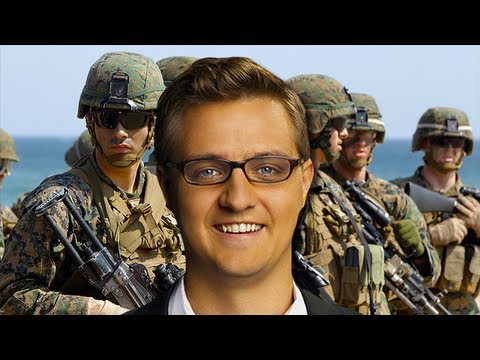
"I think it's interesting because I think it is very difficult to talk about the war dead and the fallen without invoking valor, without invoking the words "heroes." Why do I feel so [uncomfortable] about the word "hero"? I feel comfortable -- uncomfortable -- about the word because it seems to me that it is so rhetorically proximate to justifications for more war. Um, and, I don't want to obviously desecrate or disrespect memory of anyone that's fallen, and obviously there are individual circumstances in which there is genuine, tremendous heroism: hail of gunfire, rescuing fellow soldiers and things like that. But it seems to me that we marshal this word in a way that is problematic. But maybe I'm wrong about that."
Clearly the words of an effete communist! At any rate the usual suspects responded with a slew of silly ad hominems. Chris then issued an apology, for no good reason whatsoever. He simply had nothing to apologize for. He was certainly empathetic enough (commending genuine heroism, thanking a Marine Causality officer for his service, being careful about not offending families of the fallen, considering a rebuttal to his statement), and at the very least lived up to the rigor of mainstream news sources! Moreover he reasonably displayed discomfort one of the axiomatic assumptions of American discourse, something which should be welcomed. Chris even mentioned he could be wrong!
At any rate, in this post I want to dissect what Chris Hayes said, and question what the conditions must be met in order for one to be heroic, and what kind of good it might be to join the military.
Instrumental versus Intrinsic Bads and Goods
There was a central confusion in the response to Chris Hayes involving the ever crucial distinction between intrinsic and instrumental (OR extrinsic) bads and goods. An intrinsic good is good as an end in itself; intrinsic bad is bad as and end in itself. For example pleasure is an intrinsic good, it's good for it's sake, not for other things which it gets you. Pain is an intrinsic bad, you don't seek pain for it's self (even masochists seek pain for pleasure). An instrumental good is good only insofar as it brings about other goods. Instrumental goods are good because they cause other good things to happen. So although pain may be intrinsically bad, many people view it as an instrumental good. You may have to go through severe pain in order to become stronger (no pain, no gain!). So a thing can have both intrinsic and instrumental properties.
With this distinction in mind we can see that Hayes is putting forth the idea that constantly implying that past and present members of the armed forces are heroes is an instrumental bad. It's not bad in and of itself to call some person a heroes (for as Hayes specifically mentioned some members of the military obviously were heroes) but constantly referring to the fallen as heroes is bad instrumentally because it is used as a tool for more wars (at least some of which are bad). Now some critics took him as saying "none of the war dead should be called heroes" if they had bothered to listen to his statement you will see that this is a gross caricature of Haye's suggestion. But I think the majority took him as arguing against the thesis: that there is something intrinsically good about joining the military. That is someone who makes the sacrifices and serves their country in such a manner deserves to be commended for what they have done is good and heroic for as and end in itself. This however is a mistaken view, in this post I shall argue that there is nothing intrinsically good about being a member of the armed forces. At least that it isn't sufficient condition for heroism.
Heroism and Justification for War
But before confronting this issue about intrinsic heriocs, lets return to comprehending the how instrumental constantly commending fallen heroes may be. Lets briefly consider reasons for thinking it's an instrumental good or bad. For one it brings about the good of reverence for our ancestors, our comrades if you will. It brings consolation to some of the families. Further it may influence others to join the military, and insofar as that is a good thing commending the fallen is as well. Of course all these premises could be questioned. What reasons could there be for thinking constantly commending the war dead is instrumentally bad? One might reverse the last point for thinking it is good and suppose that joining the military is bad, and insofar as commending the fallen leads others to join the military it is a bad (controversial no doubt). Further some of the dead may not actually be heroes, hence it is wrong to say such. Hayes of course focuses on how accenting the heroics of the war dead leads to the justification of future wars. And since war in general is a bad, so accenting the valor of the fallen is an instrumental bad.
Which position is more reasonable? I am not so sure, at the very least one should be skeptical of the thesis that we ought to always commend the war dead. I take it that this skepticism will fully support Hayes, and the idea that an apology was unnecessary. More thoughts on how we ought to discuss heroism are considered at the end of the post.
The Conditions for Intrinsic Heroism
What makes someone a war hero? Well obviously one necessary condition for that title is that one be involved in a war. But of course that isn't sufficient, it isn't enough, for being deemed a war hero. Several more detailed accounts can be offered.
Patriotic Account for the Heroism of the Armed Forces
One might be tempted toward a very nation based account of war heroism. It may run as follows:
A person is a war hero insofar as they have served and sacrificed for their country
Hence insofar as a person has sacrificed their interests and done hard work in the armed forces they are a hero. What is important about this account is what it leaves out. For instance it isn't necessary that one serve in a just war or a war which served the interests of a nation state in question. This is a sentiment that is commonly expressed, at least in the comment sections of several reports of this discussion. Comments such as "it doesn't matter whether the war was right, what matters is that they died for their country." This exemplifies the sentiment of (what I have called) the Patriotic Account; serving and sacrificing for one's country is intrinsically good.
But this claim entails absurd implications. Under this framework the Japanese Bomber's in Pearl Harbor are heroes. So are the American Soldiers who raped and murdered victims in the Vietnam War. So at least some account of moral behavior has to be included. And if morality is to be included in the assessment of potential heroes, then an obviously relevant moral factor is the justness of their cause. So unless one is tempted to bite the bullet and allow that those who sacrificed in order to commit murder, rape, and genocide are in some way heroes the morality of the war is relevant. Of course this is not to say that no soldiers are heroes. Nor that even the solders who aren't perhaps heroes by virtue of their cause don't have any exemplary virtues. But this argument is sufficient to show that the Patriotic Account is mistaken.
Just War Account for the Heroism of the Armed Forces
Here then is another account for the appropriate conditions of heroism, call it the Just War Account:
A person is a hero if these conditions are met (a) they have served and sacrificed for their country and (b) they have done so in a just war
So although there is nothing heroic about serving in the military, all by itself, there is indeed something heroic about sacrificing for a just cause. There is an intrinsic good in serving one's country for a just cause, not just the instrumental good obtained from the ends of a just cause.
An objection is in order. In many cases it seems as though those in the armed forces are deceived or misinformed into thinking they were involved in a just war. So although they had the right intentions and reasonably thought they were in a just war, they were in fact were not. The person may have been brainwashed, simply tricked, or perhaps those commanding the war were mistaken.This appears intuitively unfair to call military member A who reasonably served in a just war that was in fact just a hero, whereas military member B who reasonably serves in an unjust war isn't deemed a hero. In both cases A and B were being reasonable, yet B isn't called a hero because of forces out of her knowledge and control. What should we do in cases like these?
I am honestly am not so sure. I don't know what to say about cases like these, other then that we can decrease them. If society stresses the importance of fighting in a just war, education and thought on what such a war would look like, and holds the government accountable we can decrease the numbers of those non-culpable persons fighting in unjust wars, like member B.
The Direction of Future Discussion
Thus ends my thoughts. We have found that there is nothing heroic in serving in the armed forces, all by itself. However the view that a hero is made when serving in the military under a just war faces a serious problem. Perhaps we should say that the conditions for heroism are sacrifice and the reasonable belief that they are fighting for a just cause. What then do we say about indoctrinated warriors? Should we call the suicide bomber who sacrifices all under the influence of religion and propaganda from which there is no escape a hero? It seems we should rather respond with empathy and sadness, to such a case instead of praise. But maybe I am wrong about that.
At any rate the discussion it seems should (a) become less emotionally charged (b) stress the important condition of a heroism as being involved in a just war (or at least reasonably believing that is the case) (c) stress the importance of education, knowledge, and thought on just war theory (and morality in general) and (d) stray from the standard that all fallen military members are heroes. Though many may be, it's no more credible to say all members of the armed forces are heroes, then it is to say no members of the armed forces are heroes. Perhaps we could change the trend by promoting specific acts of heroism, as opposed to constantly commending troops in general (perhaps "support some of our troops: bumper stickers would take off). With these points in mind what Chris Hayes brought up on his show was actually praiseworthy itself!
I hope that this post provides at least minimal grounds for progress, and has not been hurtful towards anyone.
This article by Conor Friedersdorf does well in highlighting the silliness of Haye's Critics (some of them that is, there are probably some non-silly criticis) and This short read by Peter Beinart isn't bad either.
Friday, May 25, 2012
Presuppositional Apologetics
When I began my independent study on Philosophy of Religion I read very very little on Presuppositional Apologetics. Though I was roughly familiar with the transcendent argument I hardly found it convincing due to the counter-intuitional and often confusing nature of such claims, and the non-presence of such work in Philosophy of Religon today. However a few days ago I did have the pleasure of meeting a presuppositionalist of sorts, and as such it merits a response.
The Argument
The Presuppositionalist argues that everyone must presuppose the existence of God, in order to make the world intelligible. Thus ethics, logic, metaphysics, epistemology all presuppose the existence of God, more specifically, the Triune Christian God. To presuppose any x is to assume the truth of x by it's affirmation or it's denial (It's different then any x entailing y where x assumes the truth of y in it's affirmation but not in denial). So according to the Presuppositionalist when one denies the truth of Christianity one does so only by affirming the truth of Christianity! So we can construct the argument like this:
1. The world is intelligible
2. The world is only intelligible, if Christian Theism is true.
3. Therefore, Christian Theism is true.
Since everyone thinks the world is intelligibility entails Christian Theism. Notice however that in denying Christian Theism one also asserts the intelligibility of the world (that we can know at least some things, there are some objective facts, and so on), thus according to the Pressupositionalist we must assume the truth of this argument.
This argument is logically valid modus ponens, but it hardly appears sound. Premise 1 is clearly true, but why think premise 2 is true? The statement (a) Christian Theism is false and (b) The world is intelligible are not in any way saliently contradictory. So premise 2 is obviously needed in order for the claim that they (a) and (b) are inconsistent. There is as far as I can tell there is one central reason for supposing premise two is true. Namely, Christian Theism is the best way to make sense of the fact that the world is intelligible; because logic, ethics, and so forth all demand a foundation which can only be supplied via Christian Theism. This argument I will claim is entirely unconvincing. By doing so I will confront the issue of logic in isolation. I take it that if one need not presuppose the existence of God in order to affirm the truths of logic, one shouldn't have to presuppose the same for ethics, epistemology, metaphysics, and so on. Though of course the existence of God may best explain, be confirmed by, or entail such phenomena such arguments are noticeably different from the one advanced here.
Of course, it would be greatly appreciated if readers comment on ways in which the presuppositionalist argument could be better formed, or other arguments for premise 2--if there are such possibilities.
Objections
What We Actually Presuppose
Since the presuppositionalist demands that logic needs a foundation we might ask why. I suppose that they would say something like this: "You can only justify the use of reason with reason. That is begging the question. We must all beg the question this way, but the only view which makes sense of this is Christian Theism" or they might create a dilemma "Logic is either founded in physical things, social conventions, or the Christian God. Since it isn't physical and they aren't social conventions, Logic's foundation must be the Christian God." Lets take the latter argument first (Which is sounding a bit like the argument from reason, not really a transcendental argument). First, it doesn't seem entirely implausible (though improbable) that facts about logic are really physical facts, however lets grant the point that facts about logic cannot be founded in physical facts. Even so, there is no reason to grant Christian Theism. For Logic might be founded in necessarily existing abstract entities. Thus the state of affairs in which logic obtains occurs necessarily (it could not not occur). There is no possible world in which these state of affairs do not obtain. Hence we can affirm logic, while consistently denying the existence of God. After all this is what theists will say about the existence of God, that her existence occurs necessarily, that she cannot not exist and so on. But at this point the presuppositionalist may yell "no so fast!" and revert to the first criticism. This criticism has two problems, first we should be skeptical of the claim "We must all beg the question this way, but the only view which makes sense of this is Christian Theism." Why think this is true? Why think Christian Theism is the view that best makes sense of Logic? This question will be investigated below. Further though the statement "You can only justify the use of reason with reason. That is begging the question" reveals our actual presupposition, and I think the key for undoing the presuppositionalist argument. For look at these claims:
(4) because of logic you can't beg the question
(5) logic is justified because of logic and
(6) logic is logically unfounded because it begs the question.
First off (5) may very well be false, logic may be justified because it occurs necessarily void of any logical considerations, but lets grant that there is no escape route here. What do (4)--(6) assume? The truths of Logic! Hence Logic is presupposed in affirmation or denial. Thus it is a fundamental presupposition. To make this clear let's investigate this further by introducing a standard question begging argument.
(7) Christian Theism is true if the Bible is true
(8) The Bible is True
(9)Therefore, Christian Theism is true
If you don't like this example pick another one. Essentially the conclusion of this argument is assumed in one of the premises (since at least in this example, the claims Christian Theism is true and the Bible is true are equivalent). This goes wrong because of another thing which is assumed namely logic. We sketch out this arguments invalidity because of logic, and nothing else. Observe (Christian Theism is true=C, Bible is true=B, and Logic obtains=L); The argument for B and C is invalid because L. Compare this statement with the argument which claims logic needs support because it begs the question: The argument for L is invalid because of L. The only way this argument could work would be if the reasons for supporting logic beg the question, but in order for an argument to beg the question logic must obtain. The denial of L assumes the truth of L! Thus one asserts the truth of Logic by assertion and denial.
Yes, of course the presuppositionalist might reply, but logic still presupposes God. But how can one presupposition presuppose another? For it's not that logic entails God, it's that logic presupposes God. This seems incoherent, even if it isn't how could we know? For since the truth of logic itself is presupposed in discourse, how could it be dependent on God's existence? If God didn't exist could we couldn't say logic wouldn't exist, because we must presuppose logic! Thus we have a problem of incoherence, and epistemology. This objection appears to damn the presuppositionalist's argument.
Why Presuppose Christian Theism?
Even if what I said earlier is false there seems to be little reason to suppose we ought presuppose Christian Theism over other alternatives. Why not Islam, Mormonism, or Buddhism? Or better why not presuppose "the ultimate foundation being" which is an impersonal, amoral being which is the foundation of all things. Or perhaps, a set of beings or entities which together found logic? Christian Theism hardly seems to have the upper hand against these alternatives, and due to atheological arguments it may very well have a lower one. Surely we ought to have reasons for preferring Christian Theism over what could very well be an infinite number of alternatives capable of grounding the intelligibility of the universe.
On the Fear of Pleasing the Unbeliever
As such I am inclined to pronounce the presuppositional apologetic strategy, as formulated, a complete failure. In closing I would like to ponder whether the strategy is reasonably motivated by theology. Here is a quote from presuppositionalist John Frame in response to the charge that presuppositionalism begs the question:
The Argument
The Presuppositionalist argues that everyone must presuppose the existence of God, in order to make the world intelligible. Thus ethics, logic, metaphysics, epistemology all presuppose the existence of God, more specifically, the Triune Christian God. To presuppose any x is to assume the truth of x by it's affirmation or it's denial (It's different then any x entailing y where x assumes the truth of y in it's affirmation but not in denial). So according to the Presuppositionalist when one denies the truth of Christianity one does so only by affirming the truth of Christianity! So we can construct the argument like this:
1. The world is intelligible
2. The world is only intelligible, if Christian Theism is true.
3. Therefore, Christian Theism is true.
Since everyone thinks the world is intelligibility entails Christian Theism. Notice however that in denying Christian Theism one also asserts the intelligibility of the world (that we can know at least some things, there are some objective facts, and so on), thus according to the Pressupositionalist we must assume the truth of this argument.
This argument is logically valid modus ponens, but it hardly appears sound. Premise 1 is clearly true, but why think premise 2 is true? The statement (a) Christian Theism is false and (b) The world is intelligible are not in any way saliently contradictory. So premise 2 is obviously needed in order for the claim that they (a) and (b) are inconsistent. There is as far as I can tell there is one central reason for supposing premise two is true. Namely, Christian Theism is the best way to make sense of the fact that the world is intelligible; because logic, ethics, and so forth all demand a foundation which can only be supplied via Christian Theism. This argument I will claim is entirely unconvincing. By doing so I will confront the issue of logic in isolation. I take it that if one need not presuppose the existence of God in order to affirm the truths of logic, one shouldn't have to presuppose the same for ethics, epistemology, metaphysics, and so on. Though of course the existence of God may best explain, be confirmed by, or entail such phenomena such arguments are noticeably different from the one advanced here.
Of course, it would be greatly appreciated if readers comment on ways in which the presuppositionalist argument could be better formed, or other arguments for premise 2--if there are such possibilities.
Objections
What We Actually Presuppose
Since the presuppositionalist demands that logic needs a foundation we might ask why. I suppose that they would say something like this: "You can only justify the use of reason with reason. That is begging the question. We must all beg the question this way, but the only view which makes sense of this is Christian Theism" or they might create a dilemma "Logic is either founded in physical things, social conventions, or the Christian God. Since it isn't physical and they aren't social conventions, Logic's foundation must be the Christian God." Lets take the latter argument first (Which is sounding a bit like the argument from reason, not really a transcendental argument). First, it doesn't seem entirely implausible (though improbable) that facts about logic are really physical facts, however lets grant the point that facts about logic cannot be founded in physical facts. Even so, there is no reason to grant Christian Theism. For Logic might be founded in necessarily existing abstract entities. Thus the state of affairs in which logic obtains occurs necessarily (it could not not occur). There is no possible world in which these state of affairs do not obtain. Hence we can affirm logic, while consistently denying the existence of God. After all this is what theists will say about the existence of God, that her existence occurs necessarily, that she cannot not exist and so on. But at this point the presuppositionalist may yell "no so fast!" and revert to the first criticism. This criticism has two problems, first we should be skeptical of the claim "We must all beg the question this way, but the only view which makes sense of this is Christian Theism." Why think this is true? Why think Christian Theism is the view that best makes sense of Logic? This question will be investigated below. Further though the statement "You can only justify the use of reason with reason. That is begging the question" reveals our actual presupposition, and I think the key for undoing the presuppositionalist argument. For look at these claims:
(4) because of logic you can't beg the question
(5) logic is justified because of logic and
(6) logic is logically unfounded because it begs the question.
First off (5) may very well be false, logic may be justified because it occurs necessarily void of any logical considerations, but lets grant that there is no escape route here. What do (4)--(6) assume? The truths of Logic! Hence Logic is presupposed in affirmation or denial. Thus it is a fundamental presupposition. To make this clear let's investigate this further by introducing a standard question begging argument.
(7) Christian Theism is true if the Bible is true
(8) The Bible is True
(9)Therefore, Christian Theism is true
If you don't like this example pick another one. Essentially the conclusion of this argument is assumed in one of the premises (since at least in this example, the claims Christian Theism is true and the Bible is true are equivalent). This goes wrong because of another thing which is assumed namely logic. We sketch out this arguments invalidity because of logic, and nothing else. Observe (Christian Theism is true=C, Bible is true=B, and Logic obtains=L); The argument for B and C is invalid because L. Compare this statement with the argument which claims logic needs support because it begs the question: The argument for L is invalid because of L. The only way this argument could work would be if the reasons for supporting logic beg the question, but in order for an argument to beg the question logic must obtain. The denial of L assumes the truth of L! Thus one asserts the truth of Logic by assertion and denial.
Yes, of course the presuppositionalist might reply, but logic still presupposes God. But how can one presupposition presuppose another? For it's not that logic entails God, it's that logic presupposes God. This seems incoherent, even if it isn't how could we know? For since the truth of logic itself is presupposed in discourse, how could it be dependent on God's existence? If God didn't exist could we couldn't say logic wouldn't exist, because we must presuppose logic! Thus we have a problem of incoherence, and epistemology. This objection appears to damn the presuppositionalist's argument.
Why Presuppose Christian Theism?
Even if what I said earlier is false there seems to be little reason to suppose we ought presuppose Christian Theism over other alternatives. Why not Islam, Mormonism, or Buddhism? Or better why not presuppose "the ultimate foundation being" which is an impersonal, amoral being which is the foundation of all things. Or perhaps, a set of beings or entities which together found logic? Christian Theism hardly seems to have the upper hand against these alternatives, and due to atheological arguments it may very well have a lower one. Surely we ought to have reasons for preferring Christian Theism over what could very well be an infinite number of alternatives capable of grounding the intelligibility of the universe.
On the Fear of Pleasing the Unbeliever
As such I am inclined to pronounce the presuppositional apologetic strategy, as formulated, a complete failure. In closing I would like to ponder whether the strategy is reasonably motivated by theology. Here is a quote from presuppositionalist John Frame in response to the charge that presuppositionalism begs the question:
"God created our minds to think
within the Christian circle: hearing God’s Word obediently and interpreting our
experience by means of that Word. That is the only legitimate way to think, and
we cannot abandon it to please the unbeliever. A good psychologist will not
abandon reality as he perceives it to communicate with a delusional patient; so
must it be with apologists."
The argument here is that using neutral standards such as reason and evidence (Natural Theology, the approaches of Swinburne, William Lane Craig etc.) surrenders the ground to the unbeliever whose whole standards of reason and evidence depends on the presupposition of the Christian God. But as we saw earlier there is no need to do such a thing, further what we presuppose are standards of evidence and reason! So we (the apologist, philosopher, naturalist, skeptic, whatever) are like psychologists who argue with other psychologists by accepting common standards of reason and evidence, not like the some psychologists attempting to communicate with some deluded patient. As such this fear of pleasing the unbeliever is unfounded, for despite Frame's words, his life testifies to the fact that he is already pleasing many unbelievers. Thus it would seem as though Presuppositional Apologetics is not only a philosophical failure, but a theological one as well.
Sunday, April 29, 2012
New Music: Outer Room

Check out our music and download our album here!
Subscribe to:
Posts (Atom)